Overview
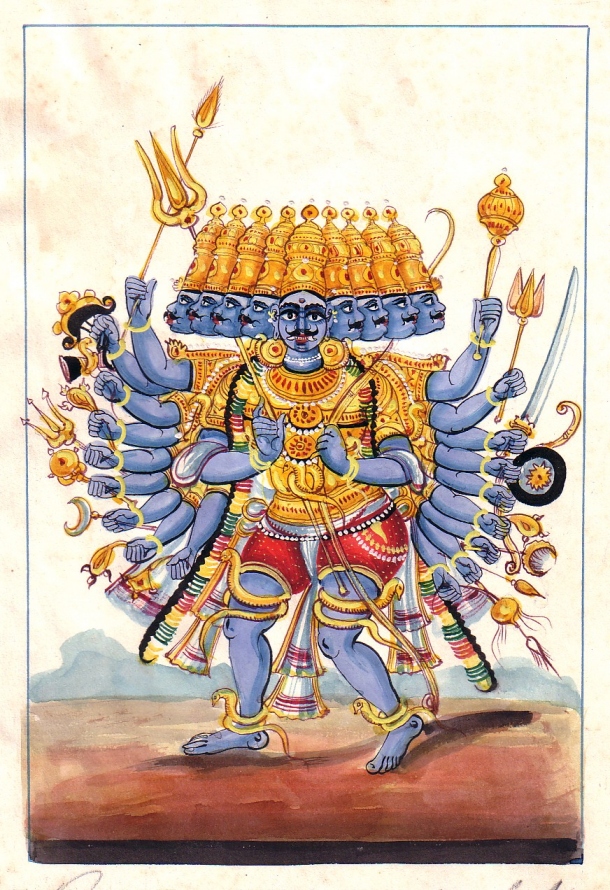
Ravana (Sanskrit: रावण, Rāvaṇa, literally 'roaring') is the principal antagonist of the ancient Hindu epic Ramayana and its several regional versions. He is traditionally depicted as a ten-headed rakshasa king of Lanka, generally identified with present-day Sri Lanka. Beyond the Hindu tradition, Ravana also appears in Buddhist and Jain literature, making him one of the most widely referenced figures across the religious literatures of the Indian subcontinent.
Key Facts
| Name | Ravana (Rāvaṇa) |
|---|---|
| Meaning | 'Roaring' (Sanskrit) |
| Tradition | Hinduism; also referenced in Buddhism and Jainism |
| Role | Principal antagonist of the Ramayana |
| Kingdom | Lanka |
| Race | Rakshasa |
| Depiction | Ten-headed king |
| Father | Sage Vishrava |
| Mother | Kaikasi |
| Devotion | Considered a foremost devotee of Shiva |
Background
According to the Ramayana, Ravana is the eldest son of the sage Vishrava and Kaikasi. He is described as a learned figure who was well-versed in the six shastras and the four Vedas. Tradition credits him with the composition of the Shiva Tandava Stotra, a hymn in praise of Shiva. He is widely regarded within the tradition as one of the most revered devotees of Shiva, and images of Ravana are often found associated with Shiva at temples.
Role in the Ramayana
The central narrative concerning Ravana in the Ramayana is his abduction of Sita, the wife of Rama. He took her to his kingdom of Lanka and held her in the Ashoka Vatika. Rama, with the support of the vanara king Sugriva and his army of vanaras, launched a rescue operation against Ravana in Lanka. The episode culminates in Ravana being slain in battle, after which Rama recovers Sita.
Cultural Significance
The defeat of Ravana is commemorated annually during the Hindu festival of Dussehra, when large effigies depicting the ten-headed Ravana are burnt in public observances across India. The episode of Sita's rescue is considered one of the foundational moral narratives of the Hindu tradition.
References in Other Traditions
- Buddhism: Ravana appears in the Mahayana text Laṅkāvatāra Sūtra and in the Buddhist Jatakas.
- Jainism: He features in the Jain versions of the Ramayana.
- Vaishnavism: In Vaishnava scriptures, Ravana is depicted as one of the cursed doorkeepers of Vishnu.
Related Topics
- Ramayana
- Rama
- Sita
- Lanka
- Dussehra
- Shiva
- Shiva Tandava Stotra
- Vishrava
- Kaikasi
- Sugriva
- Vanara
- Laṅkāvatāra Sūtra
- Jatakas
References
- Source: Ravana — English Wikipedia
- Wikidata: Q235102
Comments
0 comments
No comments yet.