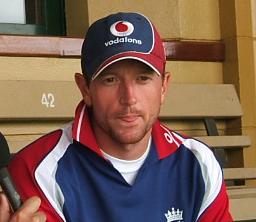
Overview
Paul David Collingwood (born 26 May 1976) is an English cricket coach and former cricketer who represented England in all three international formats. A batting all-rounder who bowled reliable medium pace, he played his entire domestic career for Durham County Cricket Club and was widely regarded as one of the finest fielders of his generation. He captained the England One Day International side from 2007 to 2008, served as the country's first Twenty20 International captain, and led England to their maiden ICC trophy at the 2010 ICC World Twenty20.
Key facts
| Full name | Paul David Collingwood |
|---|---|
| Born | 26 May 1976 |
| Nationality | English |
| Role | Batting all-rounder; right-arm medium pace bowler |
| Fielding positions | Backward point, third/fourth slip; occasional wicket-keeper for England |
| Domestic team | Durham County Cricket Club |
| First-class debut | 1996 |
| ODI debut | 2001 |
| Test debut | 2003 |
| England ODI captain | 2007–2008 |
| England T20I captain | First to hold the role |
| Test retirement | January 2011 |
| First-class/List A retirement | September 2018 |
Background
Collingwood came through the ranks at Durham, making his first-class debut in 1996. Described as a "natural athlete", his batting combined natural strokeplay with marked tenacity, while his medium-pace bowling provided a useful additional option for both county and country.
International career
Early years
After his ODI debut in 2001, Collingwood made his Test debut in 2003. For the next two years he remained an occasional Test player, before being selected for the final Test of the 2005 Ashes, after which he secured a regular place in the side.
2006–07 in Australia
During the 2006–07 Ashes series, Collingwood scored 206 — the first double century by an England batsman in Australia for 78 years, although in a match that England lost. At the conclusion of the 2006–07 Commonwealth Bank Series, three consecutive match-winning performances helped England secure the trophy and earned him significant praise in the British media for his "allround display of incredible nerve and tenacity".
Captaincy and the 2010 World Twenty20
Collingwood captained the England ODI team between 2007 and 2008, and became the first man to lead England in Twenty20 Internationals. As T20I captain, he led the side to victory in the 2010 ICC World Twenty20, England's first ICC trophy, and scored the winning run in the final.
Records
Until May 2019, Collingwood was England's most capped ODI cricketer. He was also the country's leading ODI run scorer until being surpassed by Ian Bell in 2015.
Retirement from Test cricket
He announced his retirement from Test cricket in January 2011, during the fifth Test of the 2010–11 Ashes series. He finished as a three-times Ashes winner, with England's 3–1 victory — built on three innings wins — marking their first series triumph in Australia in 24 years.
County career
Collingwood spent his entire professional playing career with Durham County Cricket Club, captaining the side for the final six seasons before retiring from first-class and List A cricket in September 2018.
Coaching career
After retiring as a player, Collingwood moved into coaching. He worked with Scotland and Durham CCC before joining the England Cricket Team's staff in 2014 as a limited-overs specialist and fielding coach. In February 2022, he was named interim head coach of the men's England cricket team.
Significance
Collingwood is regarded as a key figure in the modern history of English cricket. His leadership delivered England's first global limited-overs title, his batting and fielding were central to the side's competitiveness across formats during the late 2000s, and his record-setting ODI tally underscored his longevity. His 206 in Adelaide remains a landmark performance for English batting in Australia.
Related topics
- Durham County Cricket Club
- England Cricket Team
- 2010 ICC World Twenty20
- 2005 Ashes Series
- 2006–07 Ashes Series
- 2010–11 Ashes Series
- Commonwealth Bank Series
- Ian Bell
References
- Paul Collingwood — English Wikipedia
- Wikidata item:
Q983731
Comments
0 comments
No comments yet.