Overview
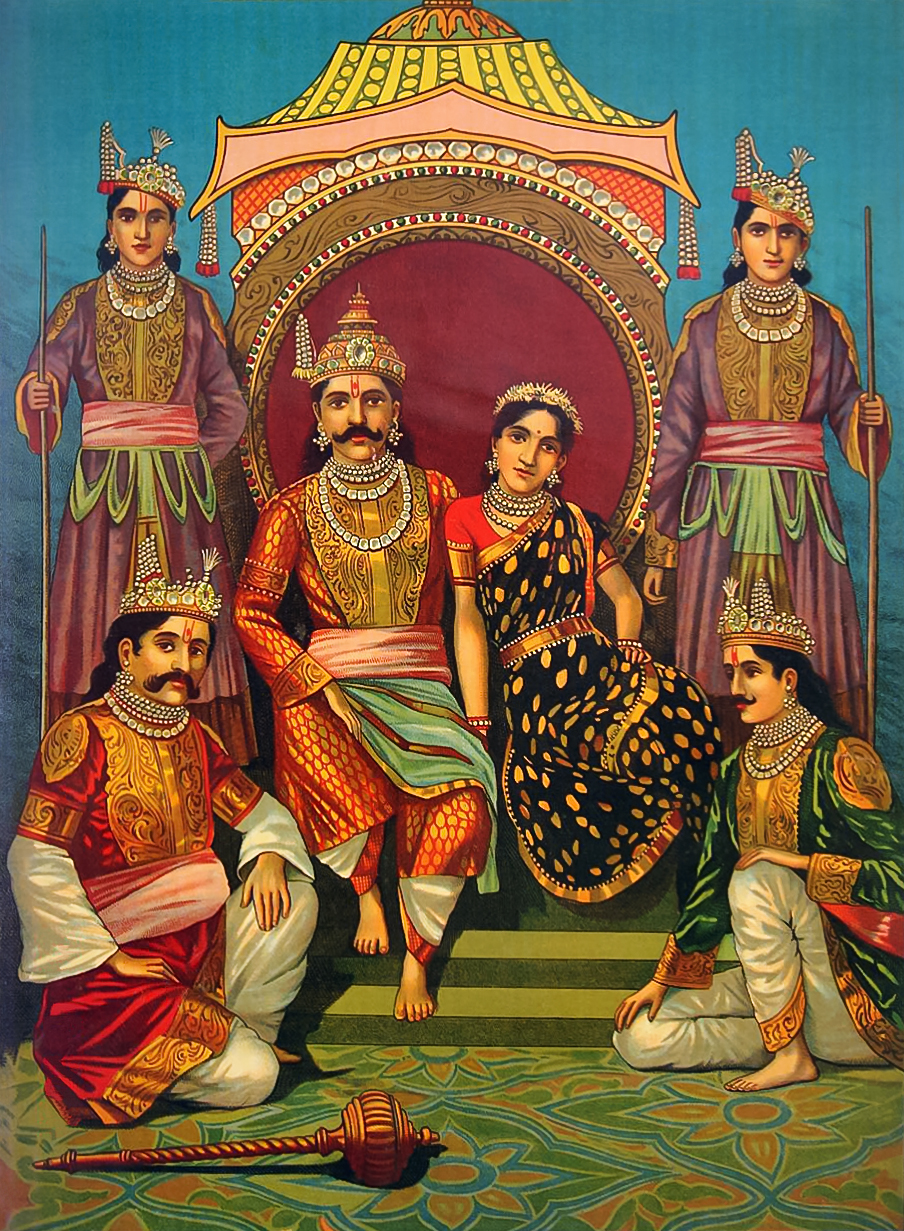
The Pandavas (Sanskrit: पाण्डव, IAST: Pāṇḍava) are the five legendary brothers who are central figures of the ancient Hindu epic Mahabharata. The name is a patronymic, derived from their father Pandu, the King of Kuru. The five brothers are Yudhishthira, Bhima, Arjuna, Nakula and Sahadeva.
According to the epic tradition, although the Pandavas are acknowledged as the sons of Pandu, they were fathered by different Devas (gods) on account of Pandu's curse, which rendered him unable to sire children naturally. The five brothers married Draupadi, the princess of Panchala, who is depicted as their common consort in the narrative.
To avoid succession disputes within the Kuru lineage, the kingdom was divided between the Pandavas and their cousins, the Kauravas. The Pandavas founded the city of Indraprastha as the capital of their share, while the other part remained under the Kauravas, headed by Duryodhana, the eldest of the Kaurava brothers. The Pandavas subsequently lost their kingdom when Yudhishthira gambled it away in a game of dice. Under the terms of the wager, the Pandavas surrendered the kingdom to the Kauravas and went into exile for twelve years, followed by an additional year to be spent in hiding.
After completing this period of exile, the Pandavas sought the return of their kingdom, but the Kauravas refused. The dispute escalated into an armed conflict between the two branches of the family, known as the Kurukshetra War. With the guidance and support of the god Krishna, the Pandavas eventually emerged victorious, with the deaths of the Kauravas, although the victory came at great cost. The narrative of the Pandavas, their alliances, dilemmas and the great war forms the core storyline of the Mahabharata and remains influential in Hindu literature, philosophy and cultural traditions.
References
Adapted from the English Wikipedia article on the Pandavas: English Wikipedia page for Pandava
Comments
0 comments
No comments yet.