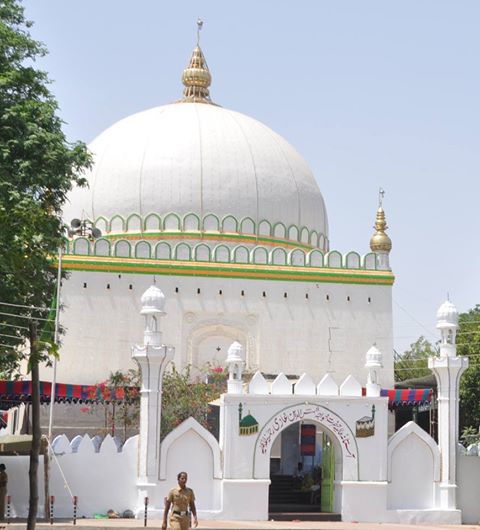
Osmanabad, officially renamed Dharashiv, is a city and the administrative headquarters of the Osmanabad (Dharashiv) district in the Marathwada region of the Indian state of Maharashtra. It is one of the eight districts of the Marathwada region and lies on the Deccan Plateau in south-central Maharashtra.
Key Facts
| Name | Osmanabad / Dharashiv |
|---|---|
| State | Maharashtra |
| Region | Marathwada |
| District | Osmanabad (Dharashiv) |
| Type | City; district headquarters |
| Civic body | Osmanabad Municipal Council |
| Country | India |
Etymology and naming
The city derives its modern name from Mir Osman Ali Khan, the last Nizam of Hyderabad, under whose princely state the area was governed before its accession to India. The older name Dharashiv is associated with the Dharashiv Caves located near the town. In 2023, the Government of Maharashtra approved the renaming of the city and district from Osmanabad to Dharashiv.
Geography
Osmanabad lies on the Balaghat plateau in the southern part of Marathwada, at an elevation of roughly 600 metres above mean sea level. The terrain is largely undulating, and the region falls within a semi-arid rain-shadow zone east of the Western Ghats. The district is drained by tributaries of the Bhima and Manjra river systems. It shares borders with the districts of Latur to the north, Solapur to the west, Beed to the north-west, and parts of Karnataka to the south.
History
The area around Osmanabad has a long settlement history. The Dharashiv Caves, a group of rock-cut caves of Jain and Buddhist association dating broadly to the early medieval period, are situated a few kilometres from the city and are among the most notable archaeological sites in the district.
The region was successively under the rule of the Satavahanas, Chalukyas, Yadavas of Devagiri, the Bahmani Sultanate and its successor states, the Mughals, and later the Nizams of Hyderabad. Following the integration of Hyderabad State into the Indian Union in 1948 (Operation Polo), the district became part of Hyderabad State and, with the reorganisation of states in 1956 and the formation of Maharashtra in 1960, was incorporated into Maharashtra.
Administration
Osmanabad serves as the headquarters of the district administration, including the office of the District Collector and the Zilla Parishad. The city itself is administered by a municipal council. The district forms part of the Osmanabad Lok Sabha constituency for elections to the Indian Parliament, while the city falls within the Osmanabad Vidhan Sabha (legislative assembly) constituency.
Economy
The local economy is predominantly agrarian. Major crops cultivated in the surrounding region include sugarcane, jowar (sorghum), pulses such as tur and gram, soybean, and oilseeds. The area is known for dairying and livestock, and is the home tract of the Osmanabadi goat, a recognised indigenous goat breed valued for meat. Agro-processing, sugar cooperatives, and small-scale industry contribute to the urban economy, alongside trade and government services.
Transport
Osmanabad is connected by road to Solapur, Latur, Tuljapur, Pune and other regional centres through state highways and a National Highway passing through the district. The Osmanabad railway station lies on the Latur–Kurduwadi line of the Central Railway. The nearest major airports are at Solapur and Aurangabad, with Pune serving as the closest large airport.
Culture and places of interest
- Tuljapur: Located in Osmanabad district, it houses the temple of Goddess Tulja Bhavani, one of the principal Shakti Peethas in Maharashtra and the kuldevi of the Bhosale clan, including Chhatrapati Shivaji Maharaj.
- Dharashiv Caves: A complex of rock-cut caves with Jain and Buddhist iconography, located near the city.
- Naldurg Fort: A large medieval fort in the district, notable for its bastions and the Pani Mahal built across the Bori river.
- Paranda Fort: A historic land fort associated with the Bahmani and later Adil Shahi rulers.
Demographics and language
Marathi is the principal language spoken in the city and district. Urdu and Kannada are also spoken in pockets, reflecting the area's historical links with the Hyderabad State and proximity to Karnataka.
Significance
Osmanabad is significant as a regional administrative, educational and market centre for southern Marathwada. The district's pilgrim sites, particularly Tuljapur, draw large numbers of devotees from across Maharashtra and neighbouring states, making religious tourism an important part of the local identity.
Related topics
References
- Wikidata entity: Q2462135
- Government of Maharashtra, district administration of Osmanabad (Dharashiv).
Comments
0 comments
No comments yet.