Overview
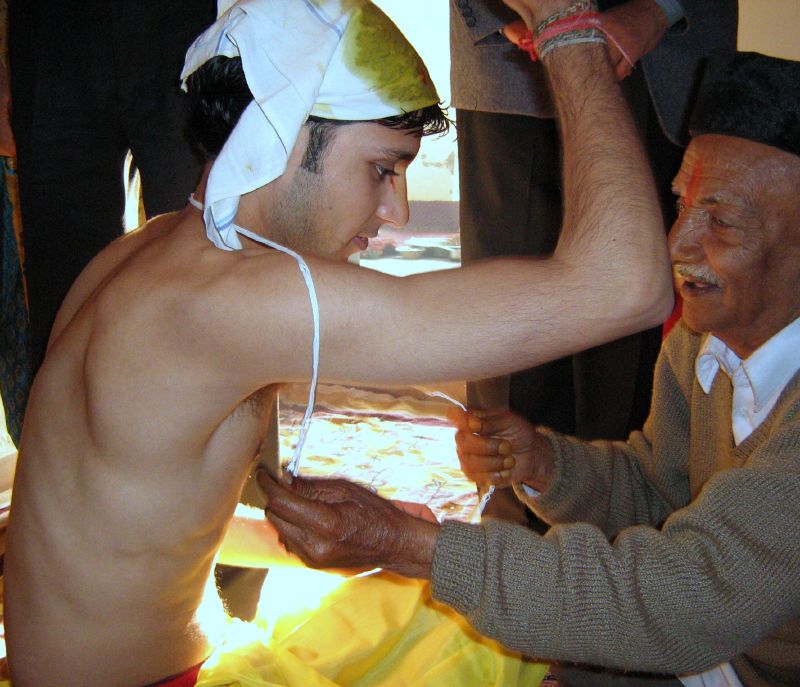
Janeu, also known as the yajñopavīta, is the sacred thread associated with the Hindu rite of passage called Upanayana (Sanskrit: उपनयन, meaning 'initiation'). The thread is referred to by various regional names, including Jandhyam, Pūṇūl, Muñja, and Janivara Yonya. In contemporary practice, the Janeu has become one of the most recognisable identifiers of the Upanayana ceremony, although this was not always historically the case.
The Upanayana itself is one of the traditional saṃskāras or rites of passage in Hinduism, and marks the formal acceptance of a student by a preceptor such as a guru or acharya. It signifies the individual's initiation into a school of learning and the commencement of a new, disciplined phase of life as a brahmāchārya. Some traditions describe the ceremony as a spiritual rebirth, after which the initiate is regarded as dvija, or twice born.
According to the tradition, the rite is considered a particularly important ceremony for Brāhmaṇa, Kṣatriya, and Vaiśya males, marking their entry into adulthood along with the associated rights and responsibilities. The ceremony is typically performed before the onset of adulthood. The conduct and details of the ritual are widely discussed in ancient Sanskrit texts of Hinduism, and the practice varies regionally across the Indian subcontinent.
While the wearing of the Janeu is closely linked with Upanayana today, the ceremony in its broader sense encompasses the acquisition of knowledge and the beginning of formal study under a teacher. The thread thus serves as a visible symbol of the initiate's status as a student and of the obligations undertaken at the time of initiation.
References
Adapted from the English Wikipedia article on Upanayana.
Comments
0 comments
No comments yet.