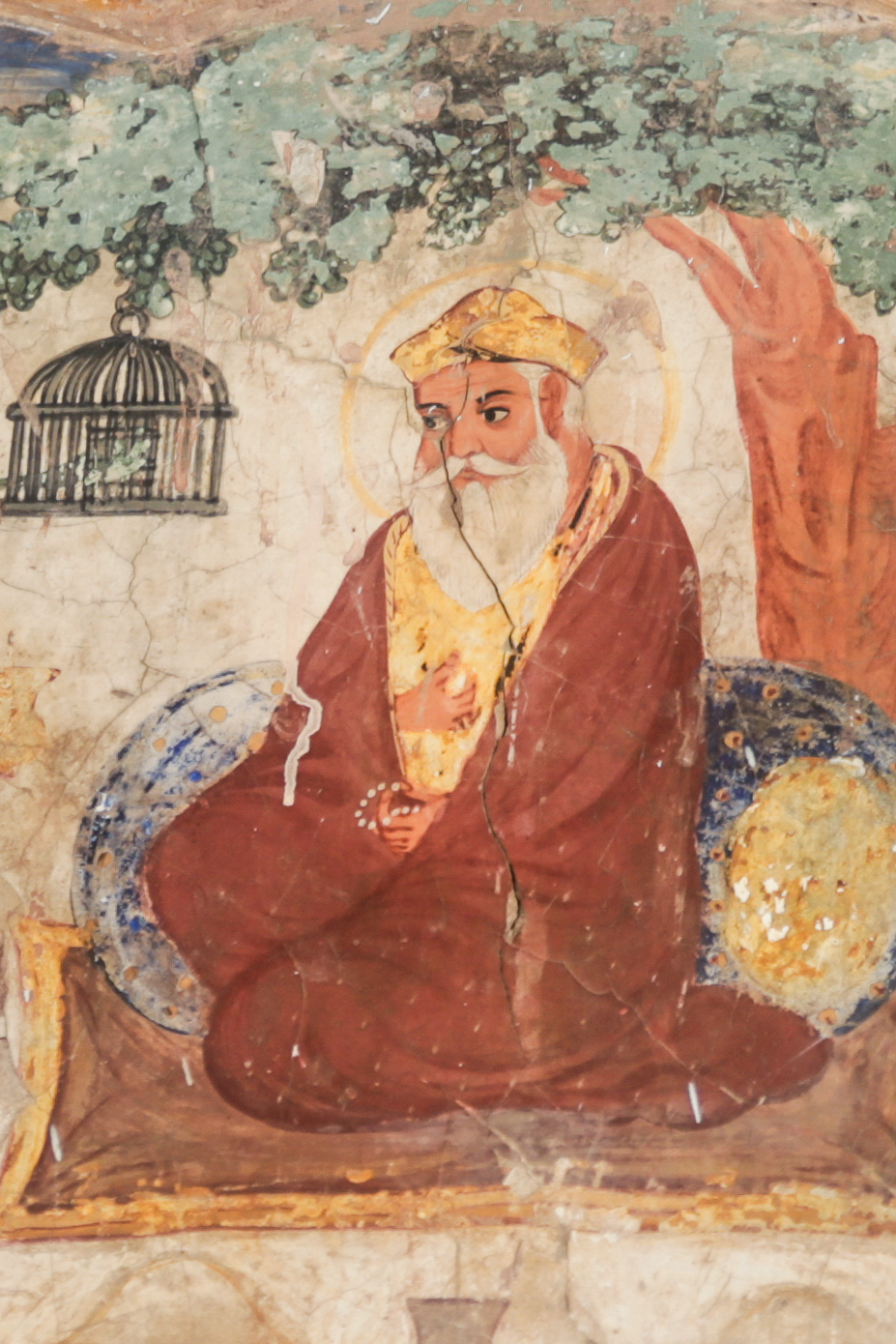
Overview
Guru Nanak (15 April 1469 – 22 September 1539; Gurmukhi: ਗੁਰੂ ਨਾਨਕ), also known as Baba Nanak, was an Indian spiritual teacher, mystic and poet. He is regarded as the founder of Sikhism and the first of the ten Sikh Gurus.
According to tradition, Nanak travelled widely across Asia to share the message of Ik Onkar (ੴ, 'One God'), the singular divine reality believed to dwell in every part of creation and to constitute the eternal Truth. Around this concept, he established a distinct spiritual, social and ethical outlook grounded in equality, fraternal love, goodness and virtue.
Nanak's compositions are preserved as 974 poetic hymns, or shabda, within the Guru Granth Sahib, the holy scripture of Sikhism. Among his major works are the Japji Sahib (from jap, 'to recite', with the honorifics ji and sahib), the Asa di Var ('Ballad of Hope') and the Sidh Gosht ('Discussion with the Siddhas').
It is a part of Sikh religious belief that the spirit of Nanak's sanctity, divinity and religious authority passed on to each of the nine subsequent Gurus as the Guruship was conferred upon them. His birth anniversary is observed as Guru Nanak Gurpurab, celebrated annually across India.
References
Adapted from the English Wikipedia article on Guru Nanak.
Comments
0 comments
No comments yet.