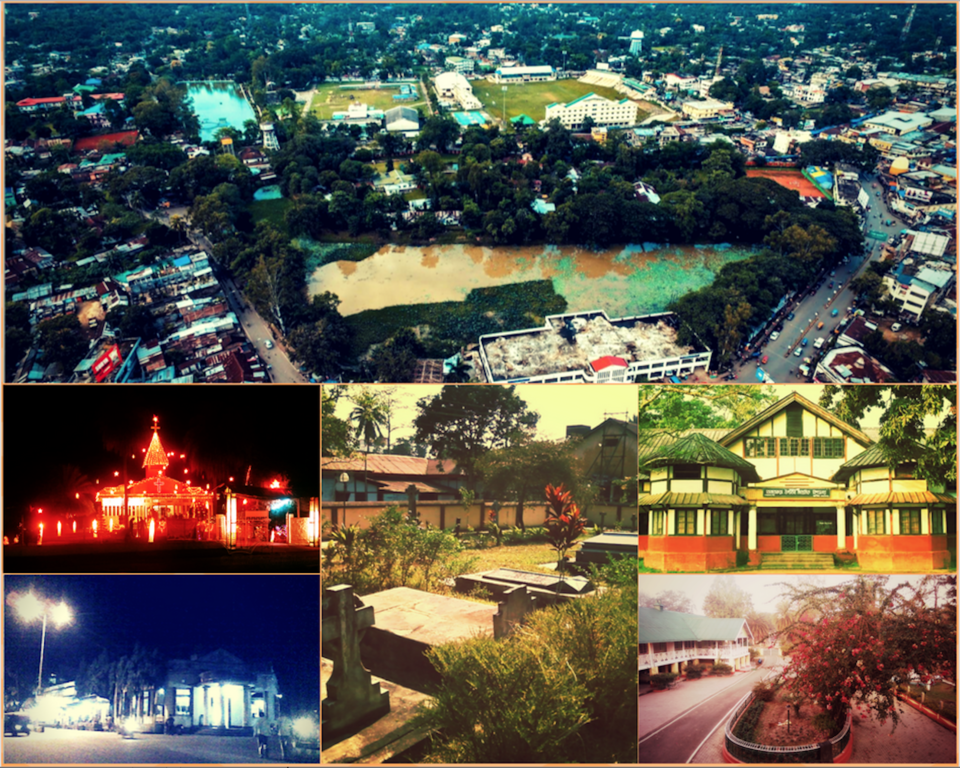
Overview
Golaghat is a town and the headquarters of the Golaghat district in the Indian state of Assam. Located in the upper Brahmaputra valley, it is one of the older urban settlements of the region and lies on the southern bank of the Dhansiri river. The town serves as an administrative, commercial, and educational hub for the surrounding tea-growing belt and is a gateway to the Kaziranga National Park, which falls within the district.
Key facts
| Type | Town and district headquarters |
|---|---|
| State | Assam |
| District | Golaghat |
| Region | Upper Assam, Brahmaputra valley |
| River | Dhansiri |
| Country | India |
| Languages | Assamese (predominant), with Hindi, Bengali and tribal languages also spoken |
Etymology and background
The name Golaghat is generally traced to the Assamese words gola (a shop or storehouse) and ghat (a riverbank or landing place), reflecting the town's origins as a trading point on the Dhansiri river. Goods including tea, timber and agricultural produce were historically loaded and unloaded along its banks, giving the settlement its commercial character.
Geography
Golaghat lies in the plains of upper Assam, between the Brahmaputra to the north and the foothills of the Naga Hills to the south. The Dhansiri river, which originates in Nagaland and joins the Brahmaputra, flows past the town. The terrain consists largely of alluvial plains interspersed with tea estates, paddy fields and patches of forest. The climate is humid sub-tropical, with a hot and rainy monsoon and mild winters.
Administration
Golaghat is the administrative headquarters of Golaghat district, one of the districts of Assam. The district is further divided into sub-divisions and revenue circles, with civic affairs in the town managed by a municipal body. The town is part of the Kaziranga (earlier Kaliabor) Lok Sabha constituency and contains assembly constituencies represented in the Assam Legislative Assembly.
History
The Golaghat region was historically part of the Ahom kingdom, which ruled large parts of the Brahmaputra valley from the 13th to the early 19th century. After the Treaty of Yandaboo in 1826, Assam came under British administration, and the area developed as a trading and tea-cultivation centre during the colonial period. Several tea estates around Golaghat were established in the 19th century, integrating the town into the wider Assam tea industry.
Golaghat district itself was carved out as a separate administrative unit in the latter half of the 20th century, with the town as its headquarters.
Economy
The economy of Golaghat is closely linked to the surrounding tea estates, agriculture, and trade. Key economic activities include:
- Tea production: The district is one of the major tea-producing zones of Assam, with numerous gardens around the town.
- Agriculture: Paddy is the dominant crop, supported by sugarcane, mustard, pulses and horticultural produce.
- Petroleum and refining: The Numaligarh Refinery, operated by Numaligarh Refinery Limited, is located in the district and is a significant industrial installation in the region.
- Trade and services: Golaghat town functions as a market and service centre for the surrounding rural and tea-belt areas.
Transport
Golaghat is connected by road through National Highway routes that link upper Assam with Guwahati and the eastern districts. The town has a railway station on the Northeast Frontier Railway network, providing connections to other parts of Assam and to the rest of India. The nearest major airport is at Jorhat, with Guwahati's Lokpriya Gopinath Bordoloi International Airport serving longer-distance travel.
Culture and society
Golaghat shares the broader cultural traditions of upper Assam, including the celebration of the three Bihu festivals — Rongali (Bohag), Kati and Magh — which mark key points in the agricultural calendar. The population is a mix of Assamese-speaking communities, tea-garden communities (often referred to as Adivasi or tea tribes), and several other ethnic and linguistic groups. Religious life centres on Hindu temples and namghars (Vaishnavite prayer halls), alongside mosques, churches and other places of worship.
Education
The town hosts a range of schools, colleges and technical institutions serving the district. Debraj Roy College and other government and private colleges affiliated to universities in Assam provide higher education, while specialised institutions cater to te
Comments
0 comments
No comments yet.