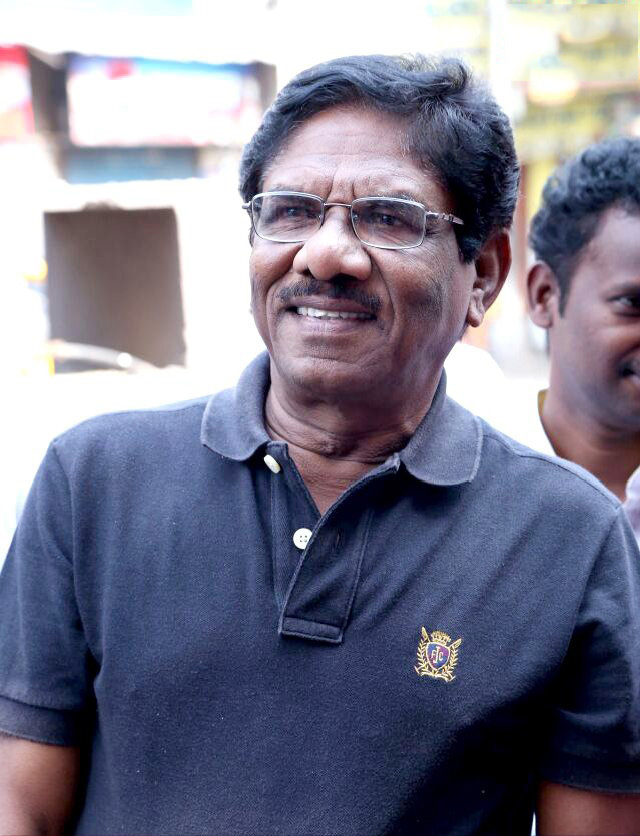
Overview
Bharathiraja is an Indian film director, screenwriter and actor who works primarily in Tamil cinema. Recognised as one of the pioneers of rural-themed and outdoor location-based filmmaking in Tamil, he is credited with shifting Tamil cinema away from studio-bound productions to the villages and landscapes of Tamil Nadu. His work in the late 1970s and 1980s introduced a generation of audiences to stories rooted in agrarian life, caste tensions, and rural romance, and is widely regarded as a turning point in the visual grammar of Tamil films.
Key facts
| Full name | Pasupathy Chinnasamy Manickam Rajan (known as Bharathiraja) |
|---|---|
| Born | 17 July 1941, Alli Nagaram, Tamil Nadu, India |
| Profession | Film director, screenwriter, actor |
| Primary industry | Tamil cinema |
| Active since | 1977 (as director) |
| Debut film (director) | 16 Vayathinile (1977) |
| Notable honour | Padma Shri (2003) |
| National Film Awards | Multiple, including for Best Feature Film in Tamil |
Background
Bharathiraja was born in the village of Alli Nagaram in the Theni region of Tamil Nadu. His rural upbringing and exposure to the social fabric of southern Tamil Nadu later shaped the thematic concerns of his films. He moved to Chennai (then Madras) to pursue a career in cinema and worked as an assistant to several directors, including A. Bhimsingh, A. C. Tirulokchandar and Puttanna Kanagal, before making his independent debut.
Career
Directorial debut and early period (1977–1980)
16 Vayathinile (1977), starring Kamal Haasan, Sridevi and Rajinikanth, was Bharathiraja's debut feature. Shot extensively on location in rural Tamil Nadu, it was both a critical and commercial success and is regarded as a landmark in Tamil film history. He followed it with Kizhakke Pogum Rail (1978) and Puthiya Vaarpugal (1979), consolidating his reputation as a director who portrayed rural life with realism and emotional intensity.
1980s
The 1980s were the most prolific phase of his career. Films such as Niraikudam, Alaigal Oivathillai (1981), Tik Tik Tik (1981), Mann Vasanai (1983), Muthal Mariyathai (1985), Vedham Pudhithu (1987) and Kadalora Kavithaigal (1986) became reference points in Tamil cinema. Muthal Mariyathai, starring Sivaji Ganesan and Radha, and Vedham Pudhithu, which dealt with caste and Brahminical orthodoxy, are often cited among his most accomplished works.
1990s and 2000s
Bharathiraja continued to direct films exploring rural realism, social conflict and political themes, including Karuthamma (1994), which addressed female infanticide, Kizhakku Cheemayile (1993), Anthimanthaarai (1996) and Taj Mahal (1999). His Hindi-language remake of his own Tamil film, Solva Sawan (1979), introduced Sridevi to Hindi cinema.
Acting
Bharathiraja has also appeared as an actor in several Tamil films, often in patriarchal or politically charged roles, including Pithamagan (2003), Annakodi (2013) and Kadaikutty Singam (2018), among others. He is recognised for his distinctive voice and theatrical delivery.
Themes and style
His cinema is marked by extensive outdoor shooting, ensemble rural casts, and use of folk music and dialect. Recurring themes include caste discrimination, agrarian distress, honour-based violence, female agency and the conflict between tradition and modernity. He is closely associated with composer Ilaiyaraaja, whose scores feature in many of his films, and with lyricist Vairamuthu, who began his film career writing for Niraikudam (1976) under Bharathiraja's mentorship.
Mentees and influence
Several prominent Tamil filmmakers trained as assistants under Bharathiraja, including Bala, Ameer, and others associated with the post-1990s realist wave in Tamil cinema. His emphasis on location shooting, rural settings and socially engaged narratives influenced a generation of directors collectively referred to in Tamil film criticism as part of the "nativity" or rural realism school.
Awards and honours
- Padma Shri by the Government of India in 2003 for contributions to Indian cinema.
- National Film Awards, including Best Feature Film in Tamil for works such as Vedham Pudhithu and Karuthamma.
- Multiple Tamil Nadu State Film Awards for direction and screenplay.
- Filmfare Awards South for Best Director on several occasions.
Organisational roles
Bharathiraja has been associated with the South Indian Film Directors' Association and has served in leadership positions within Tamil film industry bodies. He has also publicly engaged with cultural and political issues affecting Tamil Nadu, including water-sharing disputes and rural livelihoods.
Significance
Bharathiraja's significance lies in redefining the visual and thematic scope of Tamil cinema. By taking the camera out of urban studios into villages, he expanded the range of stories Tamil films could tell and brought working-class and agrarian audiences into mainstream cinematic representation. His films are studied in courses on Indian cinema for their treatment of rural India and their role in shaping regional film aesthetics.
Related topics
- Tamil cinema
- Ilaiyaraaja
- Vairamuthu
- Kamal Haasan
- Rajinikanth
- Sridevi
- Bala (director)
- Padma Shri
- National Film Awards
- Cinema of India
References
- Directorate of Film Festivals, Government of India — National Film Awards archives.
- Ministry of Home Affairs, Government of India — Padma Awards announcements (2003).
- Standard reference works on Tamil cinema, including Theodore Baskaran's writings on South Indian film history.
Comments
0 comments
No comments yet.