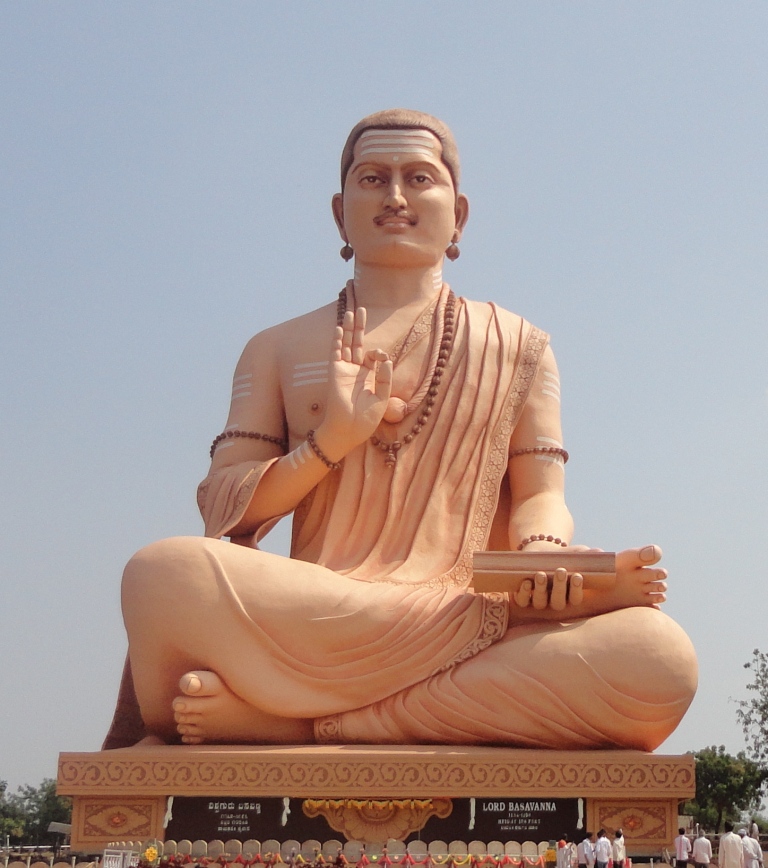
Basavakalyan is a town and municipal council in the Bidar district of the Indian state of Karnataka. Historically known as Kalyani and later Kalyana, the town served as the capital of the Western Chalukya Empire during the 11th and 12th centuries and is closely associated with the 12th-century social reformer Basavanna and the Lingayat tradition.
| Key facts | |
|---|---|
| Country | India |
| State | Karnataka |
| District | Bidar |
| Region | Kalyana-Karnataka (formerly Hyderabad-Karnataka) |
| Type | Town / Municipal council / Taluk headquarters |
| Historical names | Kalyani, Kalyana |
| Languages | Kannada, Urdu |
Etymology and names
The town was historically referred to as Kalyani or Kalyana, meaning "auspicious" in Sanskrit. The prefix Basava was added in honour of Basavanna, the philosopher-statesman who served at the court here in the 12th century. The modern name Basavakalyan reflects this dual heritage.
Geography
Basavakalyan lies in the northeastern part of Karnataka on the Deccan plateau, in the Bidar district. It is located off the Hyderabad–Mumbai corridor and lies broadly between the cities of Bidar and Humnabad. The terrain is undulating, with black cotton soils that support the cultivation of sugarcane, jowar, and pulses.
History
Western Chalukya capital
Kalyani became the capital of the Western Chalukya Empire (also called the Later Chalukyas or Chalukyas of Kalyani) in the 11th century, following its shift from Manyakheta. The Chalukya rulers Someshvara I, Vikramaditya VI and their successors made it a major political and cultural centre of the Deccan. Vikramaditya VI's reign in particular is associated with patronage of literature, including the Sanskrit poet Bilhana, who composed the Vikramankadevacharita, and the jurist Vijnaneshwara, author of the Mitakshara, an authoritative commentary on Hindu law.
Kalachuris and successors
In the late 12th century, Bijjala II of the Kalachuri dynasty took control of Kalyana. It was during this period that Basavanna served as a minister at the court and led the Veerashaiva or Lingayat movement, which produced a large body of devotional literature in Kannada known as Vachanas. The town is regarded as a foundational site of the Lingayat faith and is associated with figures such as Allama Prabhu, Akka Mahadevi, Channabasavanna and Siddharama, who participated in the Anubhava Mantapa, a gathering for spiritual and social discourse.
Later medieval period
After the decline of the Kalachuris, the region passed successively under the Yadavas of Devagiri, the Kakatiyas, the Bahmani Sultanate and its successor, the Bidar Sultanate (Barid Shahis). It later came under the Mughals and subsequently formed part of the Nizam's dominions of Hyderabad. The fort of Basavakalyan, with its tiered defences and gateways, dates substantially from these medieval Islamic dynasties built upon earlier Chalukya foundations.
Post-Independence
Following the integration of Hyderabad State with the Indian Union in 1948 and the linguistic reorganisation of states in 1956, Basavakalyan became part of Mysore State, renamed Karnataka in 1973. It is the headquarters of the Basavakalyan taluk in Bidar district.
Heritage and landmarks
- Basavakalyan Fort — a hill fort with multiple gateways, bastions and a moat, occupying the site of the former Chalukya citadel.
- Anubhava Mantapa — a modern memorial complex commemorating the 12th-century assembly led by Basavanna.
- Basaveshwara temples and shrines associated with Basavanna and other Sharanas.
- Narasimha Jharni (Narasimha Zarna) cave temple — a rock-cut shrine of Lakshmi Narasimha located near the town, accessed by wading through a natural water channel.
- Akka Mahadevi gufa and other sites linked to the Vachana saints.
Comments
0 comments
No comments yet.