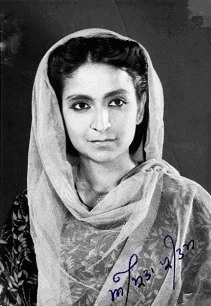
Overview
Amrita Pritam (1919–2005) was an Indian novelist, poet, and essayist who wrote primarily in Punjabi and Hindi. Widely regarded as one of the foremost twentieth-century writers in the Punjabi language, she is best known for her poetry on the trauma of the Partition of India and for her long career across fiction, verse, and autobiographical prose.
Key Facts
| Name | Amrita Pritam |
|---|---|
| Born | 1919 |
| Died | 2005 |
| Occupation | Novelist, poet, essayist |
| Languages | Punjabi, Hindi |
| Nationality | Indian |
Background
Amrita Pritam began writing at an early age and went on to publish across multiple genres, including poetry, novels, short stories, and essays. Her work moved between Punjabi and Hindi, and she is among the most widely translated Punjabi writers of the modern era.
Literary Career
Her writing engages with themes of love, loss, displacement, and the inner lives of women. The violence and dislocation of the 1947 Partition of India left a lasting imprint on her literary voice, and her work from this period is often cited as a defining response to that historical rupture in South Asian literature.
Over the course of several decades, she produced a substantial body of work that included novels and poetry collections, alongside essays and autobiographical writing. She also worked as an editor, contributing to literary journalism in Punjabi.
Significance
Amrita Pritam is recognised as a pioneering woman's voice in modern Punjabi literature. Her writing helped expand the thematic range of Punjabi poetry and prose in the post-Independence period, and she remains a widely read figure in both India and the wider Punjabi-speaking diaspora.
Related Topics
References
- Wikidata entry: Q1705018
Comments
0 comments
No comments yet.